


A reflection on Nigeria’s founding fathers and the painful legacy they left behind
The line “may the labour of our heroes past never be in vain” from Nigeria’s national pledge was meant to inspire patriotism and gratitude. It was intended as a call to honour the sacrifices of those who fought for Nigeria’s freedom and unity. But in the face of today’s harsh realities, one is forced to ask: what exactly was the labour of our heroes, and has it truly built the nation we were promised?

A Dream Deferred
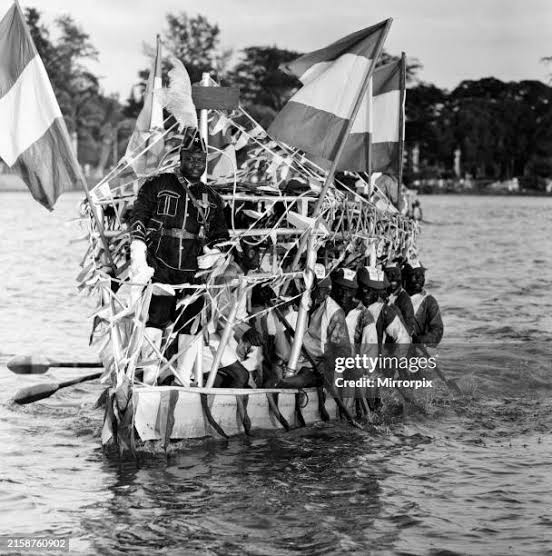
At independence in 1960, Nigeria stood tall with promise — rich in resources, culture, and hope. The founding fathers were expected to use these blessings to shape a prosperous and united country. Instead, they left behind a trail of political rivalry, ethnic division, and economic sabotage.
The same people once hailed as national heroes laid a foundation that prioritised self-interest over service, tribe over merit, and power over progress. What they called “nation-building” often served as a cover for greed, manipulation, and the entrenchment of regional sentiment.
Today, the damage of their actions has rippled across generations. The “labour” of the so-called heroes past, far from being a blessing, has become a burden carried by millions of Nigerians.
Economic Mismanagement from the Start
Nigeria’s economic story could have been a global model of success. Blessed with arable land, natural resources, and an industrious population, the nation had every advantage. But early leaders squandered these opportunities.
Rather than build industries and empower communities, they established a pattern of dependence on crude oil and foreign imports. Public wealth became private inheritance, while corruption took root and flourished. State resources were looted, and national assets converted into personal estates.
That early greed became the template for governance in Nigeria — a system where politics is not service, but a shortcut to wealth.
—
Politics of Sentiment and Favouritism
The politics of Nigeria’s early republics was driven less by ideology and more by emotion. Leaders preached unity in public, but behind closed doors, decisions were guided by ethnic, religious, and regional loyalties.
Appointments were shared like family inheritance, while national policies were designed to favour a select few. The result was a divided nation — one that has continued to struggle with mutual suspicion, unfair representation, and lack of cohesion.
The coups that followed were no better. Those who seized power in the name of “correction” only deepened the rot. The uniform replaced the agbada, but the greed remained the same.
—
The Modern-Day Inheritors of Corruption
The new generation of politicians did not just inherit the system — they perfected it. Today, corruption is more sophisticated, looting more organized, and deceit more polished.
From inflated contracts to diversion of public funds, the appetite for stealing has reached alarming levels. Hospitals are left in decay while public officials fly abroad for treatment. Schools collapse as the children of leaders study in Europe and America.
These so-called modern-day heroes are not building on the labour of the past; they are expanding its failures.
—
A Generation Bearing the Curse
The present generation is paying the price for the sins of the past. Unemployment, poverty, insecurity, and hopelessness are now the daily realities of millions. The “heroes” of old handed over not a nation, but a puzzle — a structure built on weak institutions, tribal politics, and systemic corruption.
The pledge to ensure that their labour “shall not be in vain” has become a cruel irony. The truth is that, unless things change, their labour was not just in vain — it became the curse of the future.
—
Redefining Heroism
Nigeria must rethink who it celebrates as heroes. True heroes are not those who built wealth from public coffers or divided the nation for political gain. They are not those who looted in uniform or in suits.
The real heroes are those who work honestly despite a corrupt system — the teachers who educate with little pay, the doctors who serve in failing hospitals, the journalists who speak truth to power, and the young innovators who keep believing in a better Nigeria.
They, not the looters of the past, deserve to be immortalised.
—
A Call for Redemption
If Nigeria is ever to move forward, the new generation must break free from the destructive legacy of the past. The pledge must be more than words recited at assemblies — it must become a national rebirth.
Corruption must give way to accountability. Favouritism must yield to merit. Sentiment must bow to justice. Only then can Nigeria truly reclaim the meaning of its pledge — that “the labour of our heroes past shall never be in vain.”
Until then, the haunting question remains: Have the labours of our heroes past become the curse of our present




Leave a Reply